Historical Relics Discovered in Mt Paektu Area
A research group from the History Faculty of
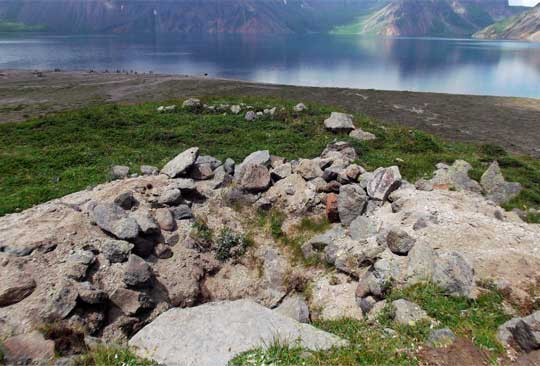
By fully analysing the distribution of the graves, differences in typical features of domestic and foreign graves and funeral customs, the research group found that the newly-discovered graves are essentially different from those of other nations in terms of grave styles and funeral customs. According to it, the remains in the graves had been wrapped in white birch bark before being placed in the pits and covered with earth. Then the surface of the mounds had been carpeted with stones completely or by half at their lower part. Researchers assert that such styles and funeral customs originate from the Koreans of Palhae who had lived in the areas of Ryanggang and North and South Hamgyong provinces and in the northeastern part of China.
The Archaeological Society of the DPRK appreciated, after examination, that the remains in the newly-found graves are those of the Koreans who had inherited the customs of Palhae.
The recent discovery scientifically corroborates that Koreans, for centuries, climbed Lake Chon along untrodden paths in the primeval forests to bury their ancestors’ remains, and regarded Mt Paektu as their ancestral mountain and part of their sacred territory.